
SCROLLS OF TIME BY FUMANI
WALTER MALULEKE
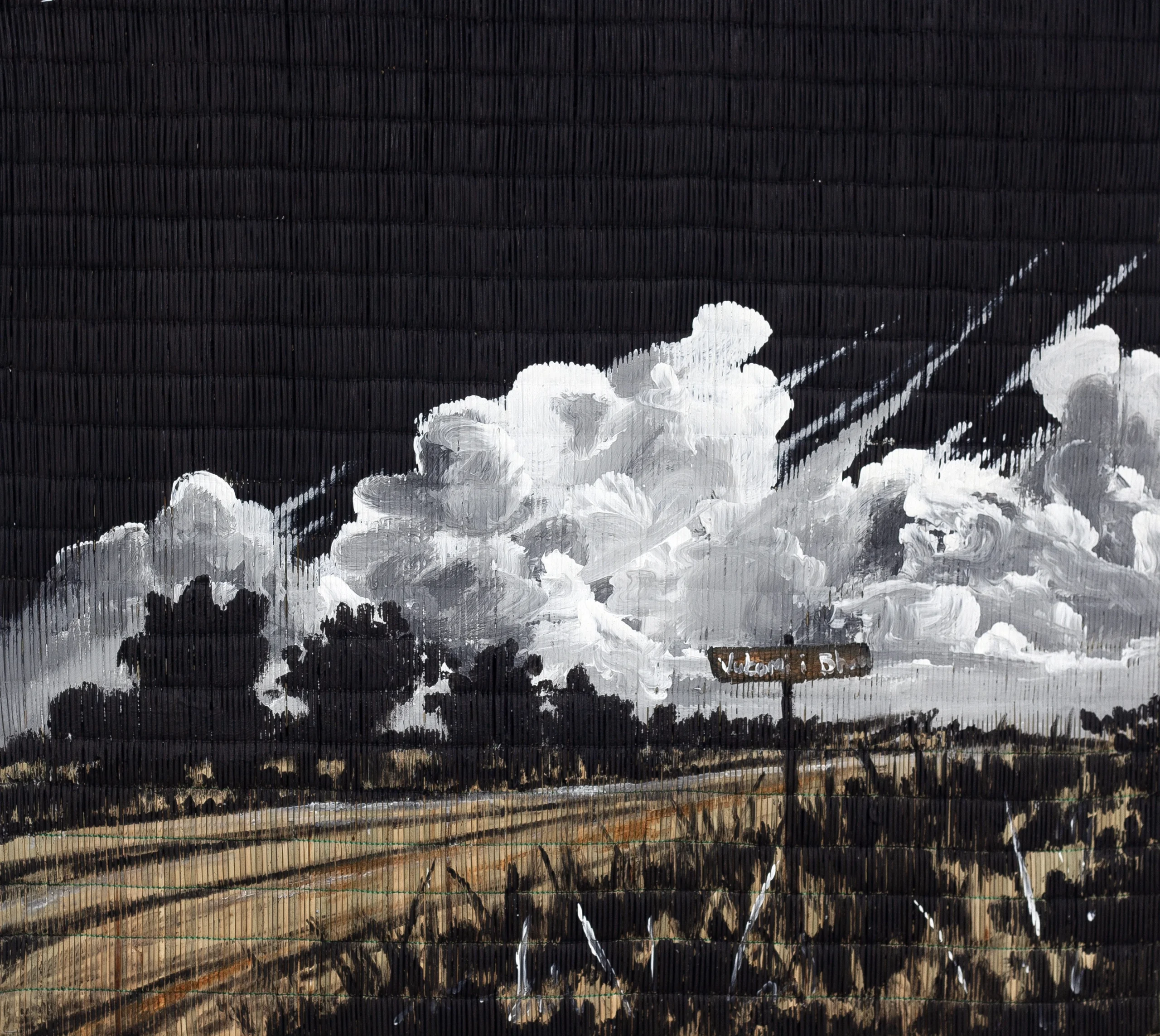
Fumani Maluleke’s latest exhibition combines sound and voiceover narration.His paintings on straw mats, traditionally used for rest and sleep, are no longeronly earthed – they are sonic.
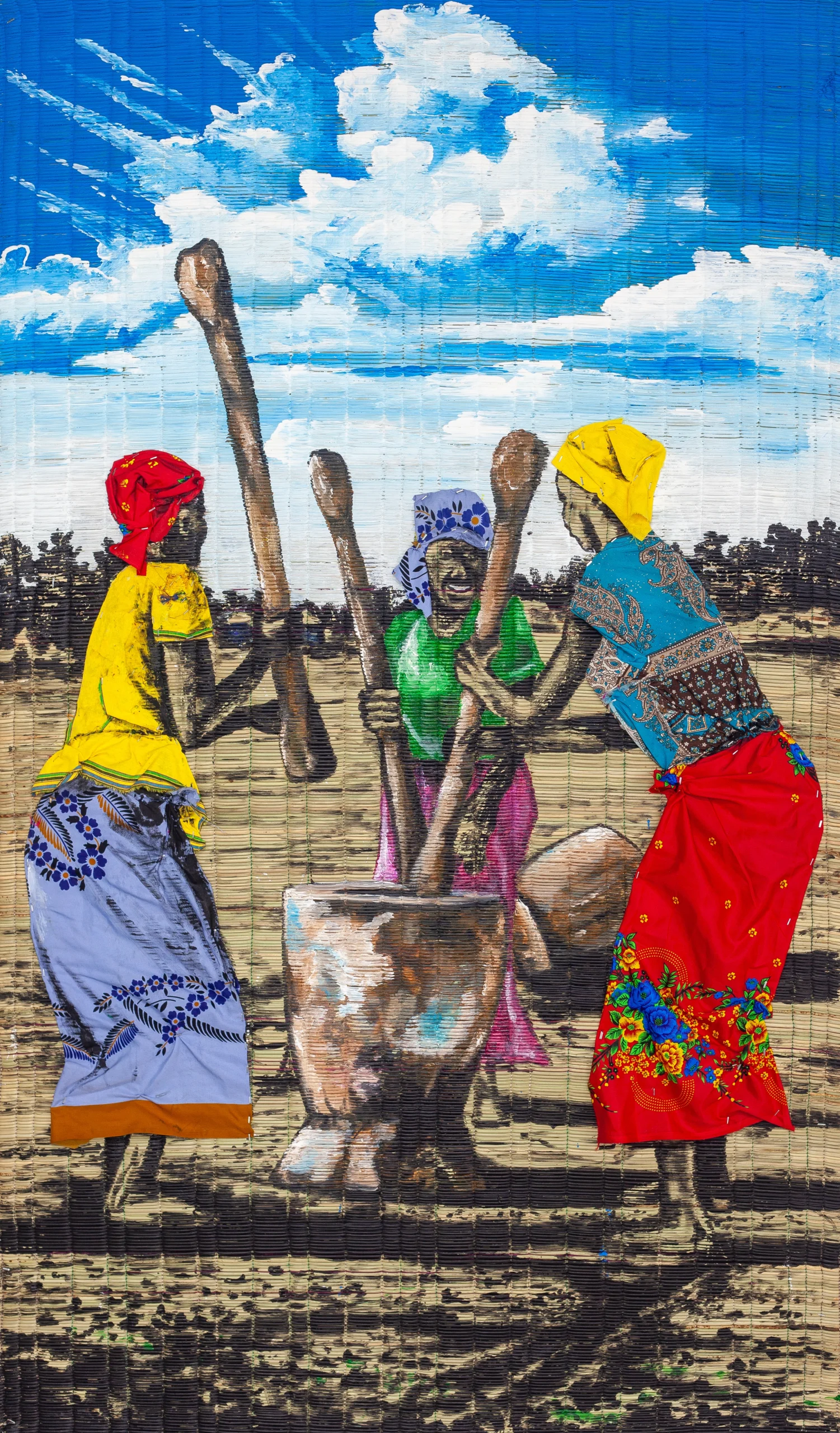
The artist’s desire to weave the human story, andthereby free the painting fromsilence, stems from an overwhelming desire to connect the past to the present,tradition to the now.
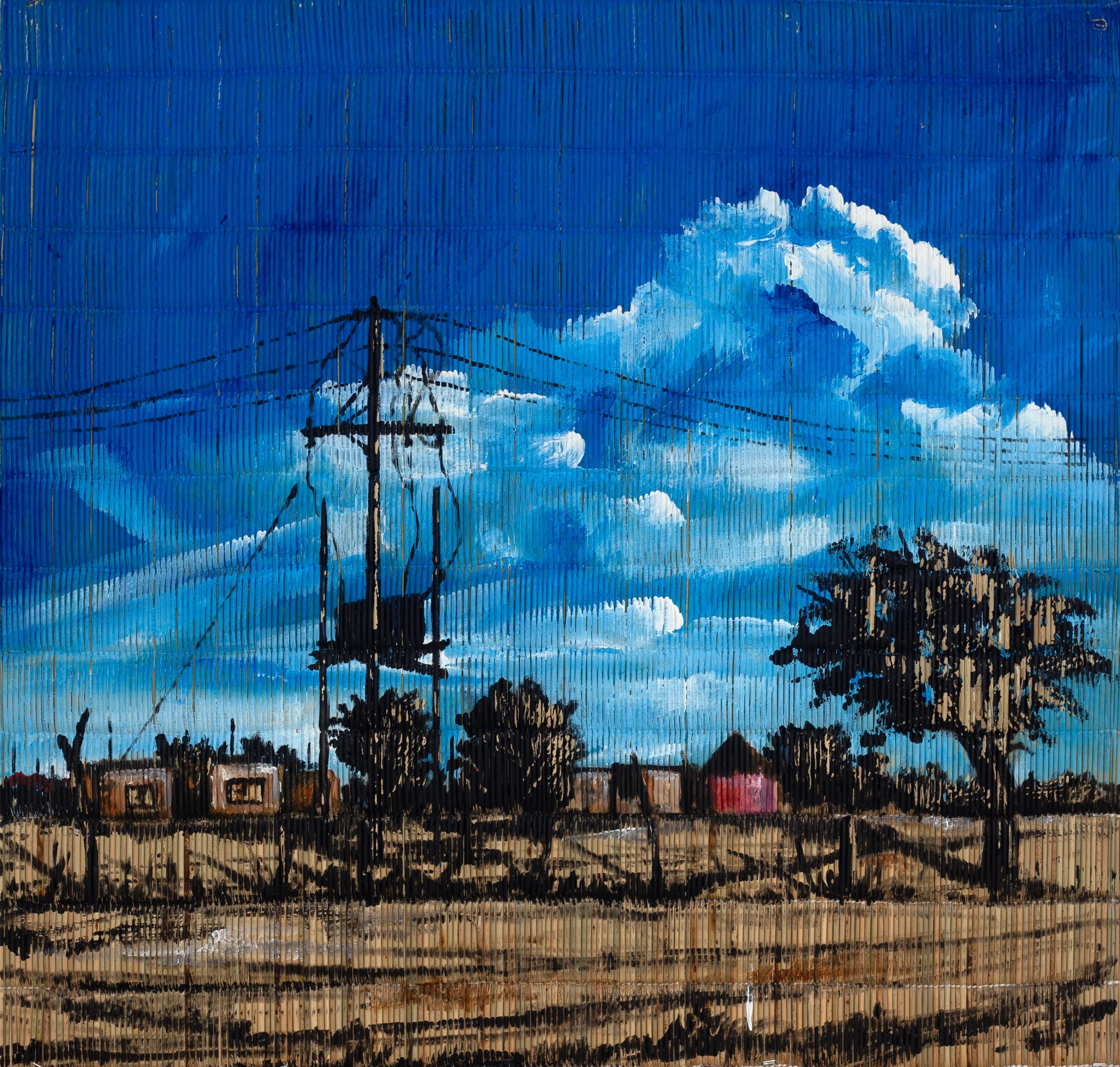
The village matriarch, the quiet reign of women, is broughtto the fore. If stories matter, if Maluleke’s paintings are no longer silent, it isbecause African village life is a rustling, like grass, an articulated universe.
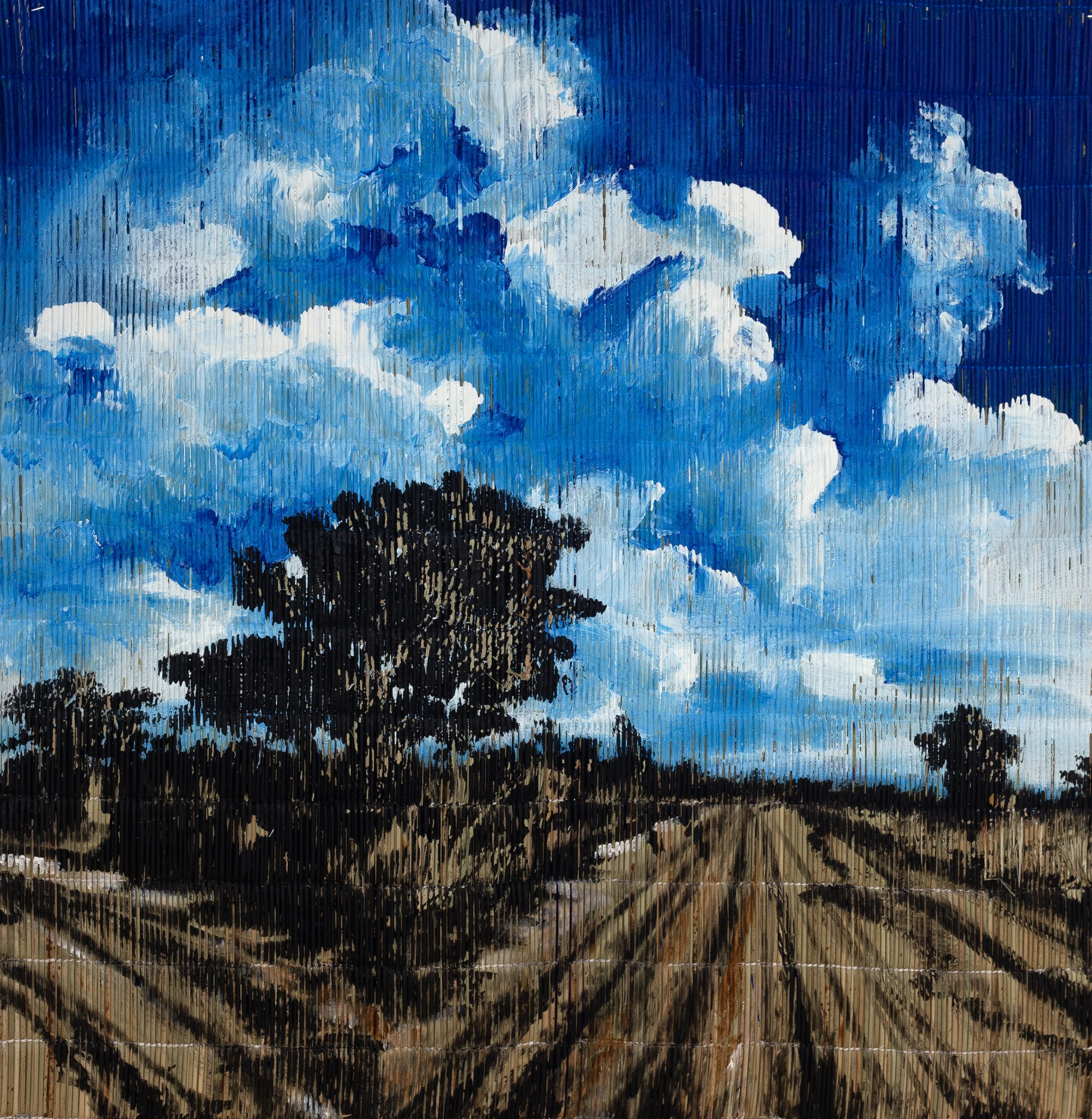
Thevoice of women is the voice of the earth. For it is rural women that form the veryground of Maluleke’s understanding of rural African life, a ground that sounds adesire for connection to a place and its people.
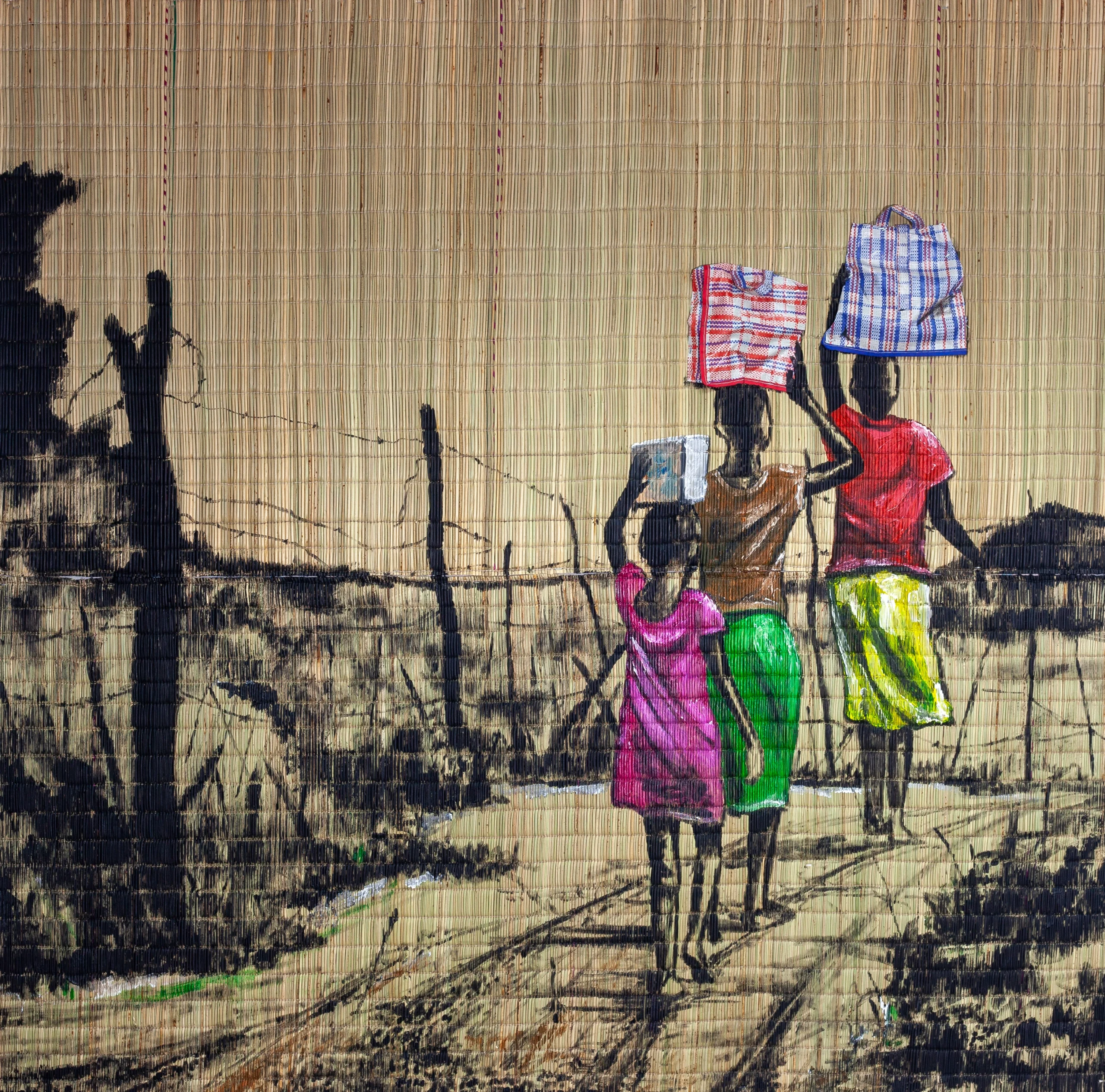
Maluleke’s paintings are distinctively pastoral. A genre dedicated to thedepiction – through literature, music, and art – of a rural idyll, the pastoral holdsfast to agrarian tradition. This idealized vision of nature and people first appearin Hellenistic and Roman wall paintings.
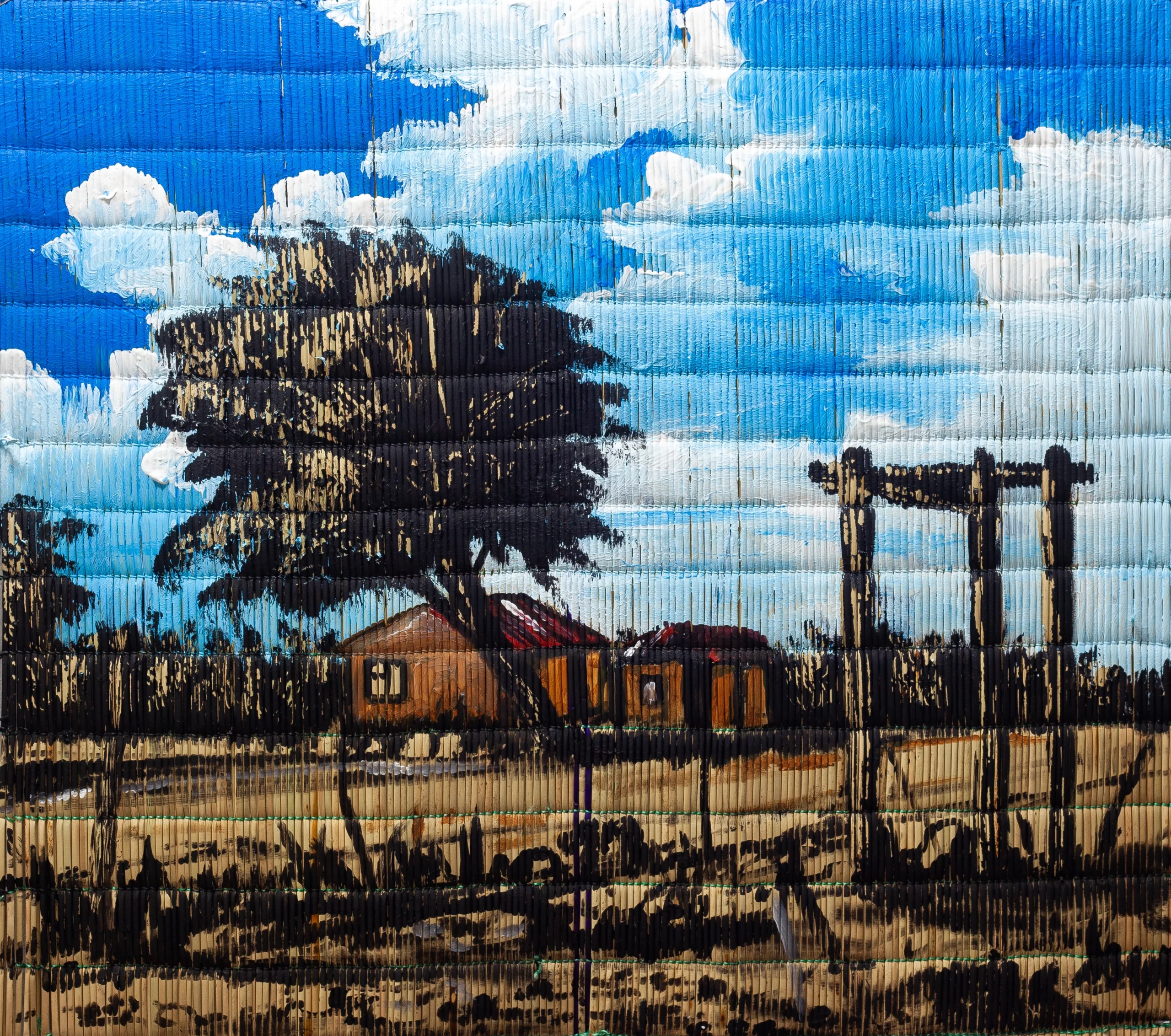
Revived in Renaissance Italy, it is the defining trope in Maluleke’s paintings. Wesee a young girl running through a grass field … two mud-made homes sedatelyresting between a thicket and a shading tree.
A mother and child, the mothercarrying an umbrella, walking along a dusty lane. Then again, three women arepounding wheat in a giant gourd. Another carries a thick sheaf of grass on herhead, while yet another weaves the grass with the aid of a loom. In all ofMaluleke’s paintings, whether peopled or not, the mood conveyed is one ofsonority, of restfulness and ease.
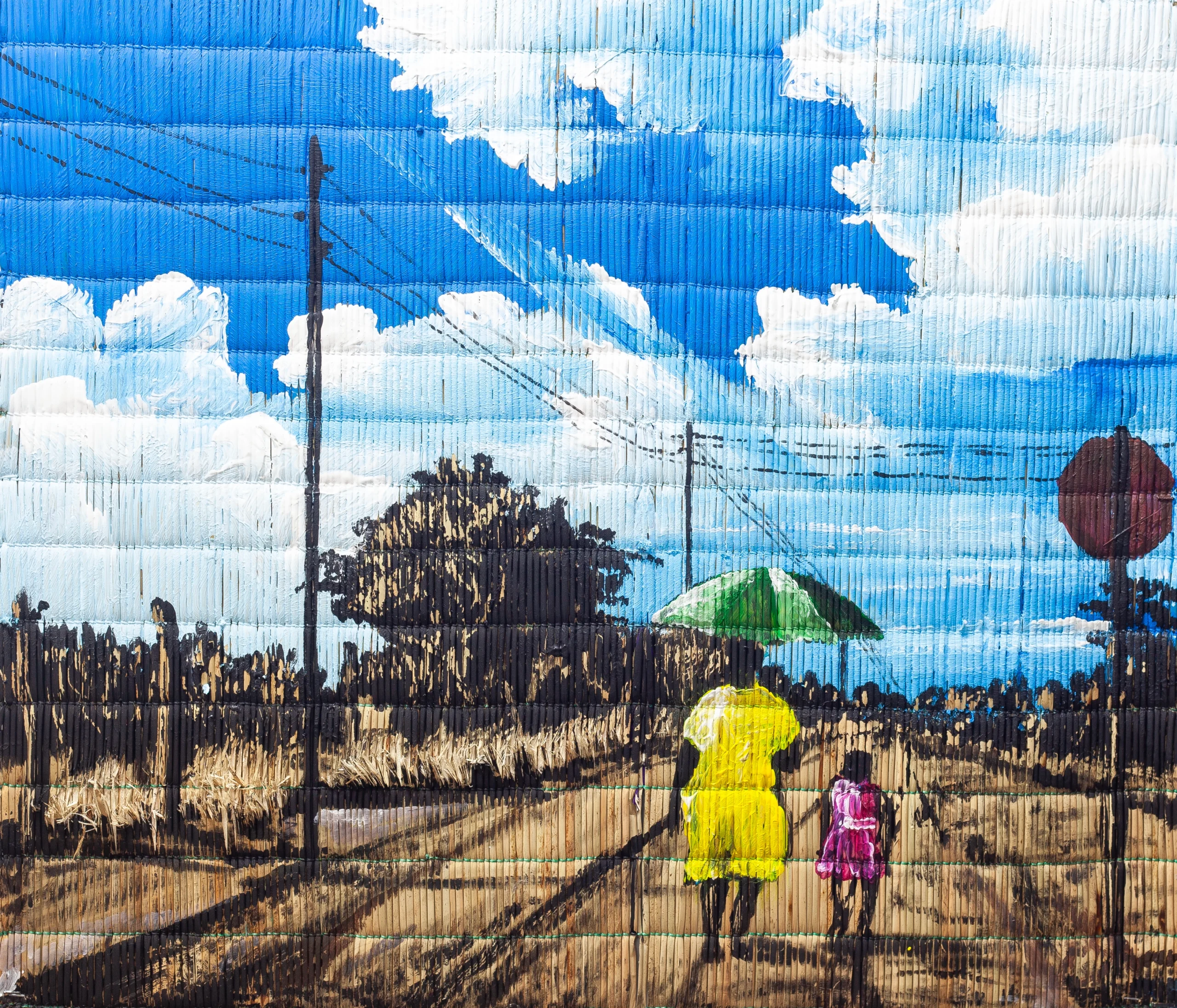
Leisure and labour are inextricable. For whatmatters most for the artist is the co-existential – the harmonious interrelation ofhuman beings and the and that is both a nurturing ground and a home.In a time as geopolitically combustible as ours, in which psychic and physicalviolence is the new normal, Maluleke’s gentle paintings are a salutary riposte.
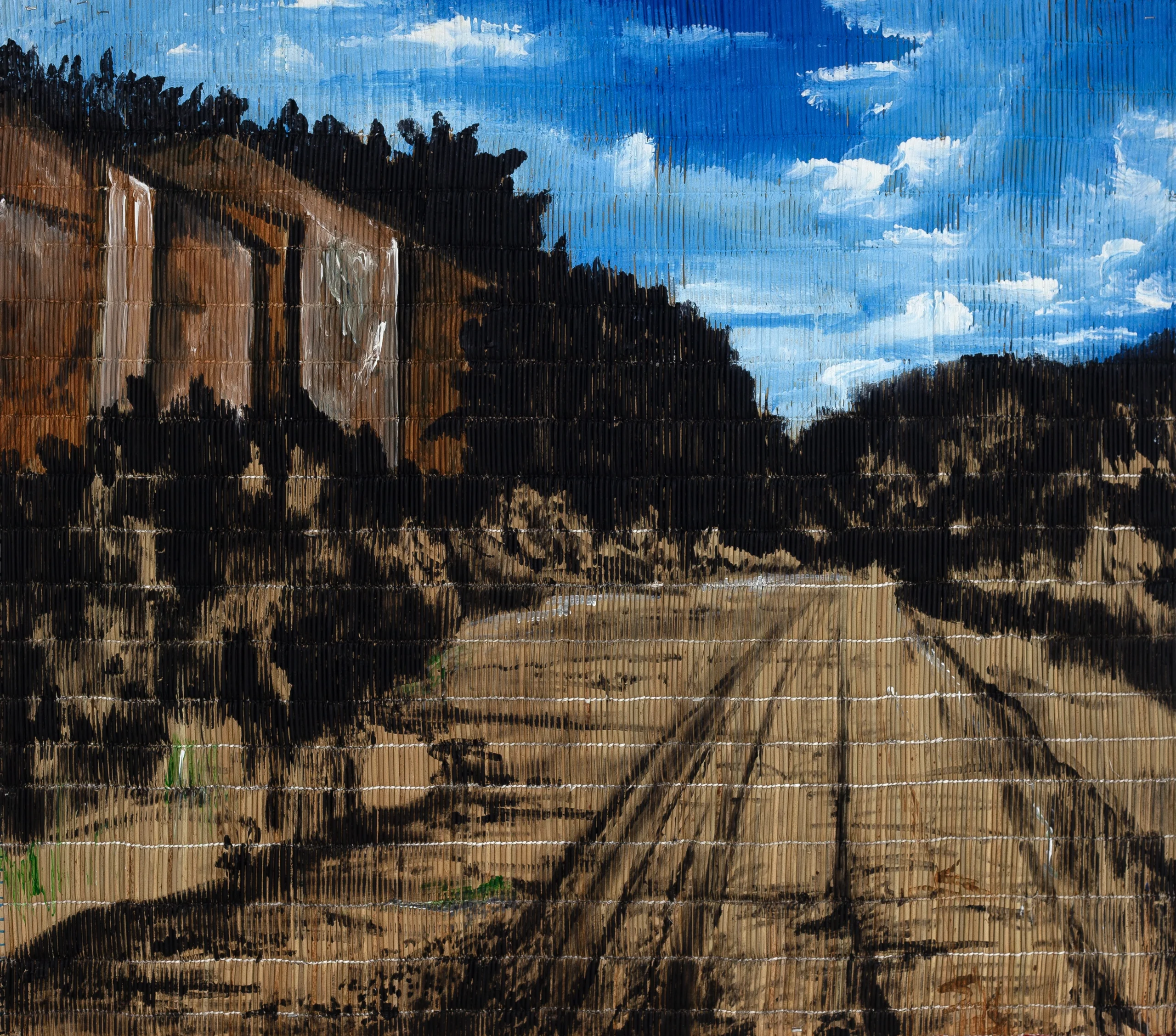
His art places love and compassion at its centre – the hallmark of the works’defining spirit, Ubuntu, the SouthernAfrican lore that we are whom we are because of others. It is this vital collectivespirit – which places the African woman centre-stage – that courses throughMaluleke’s art.
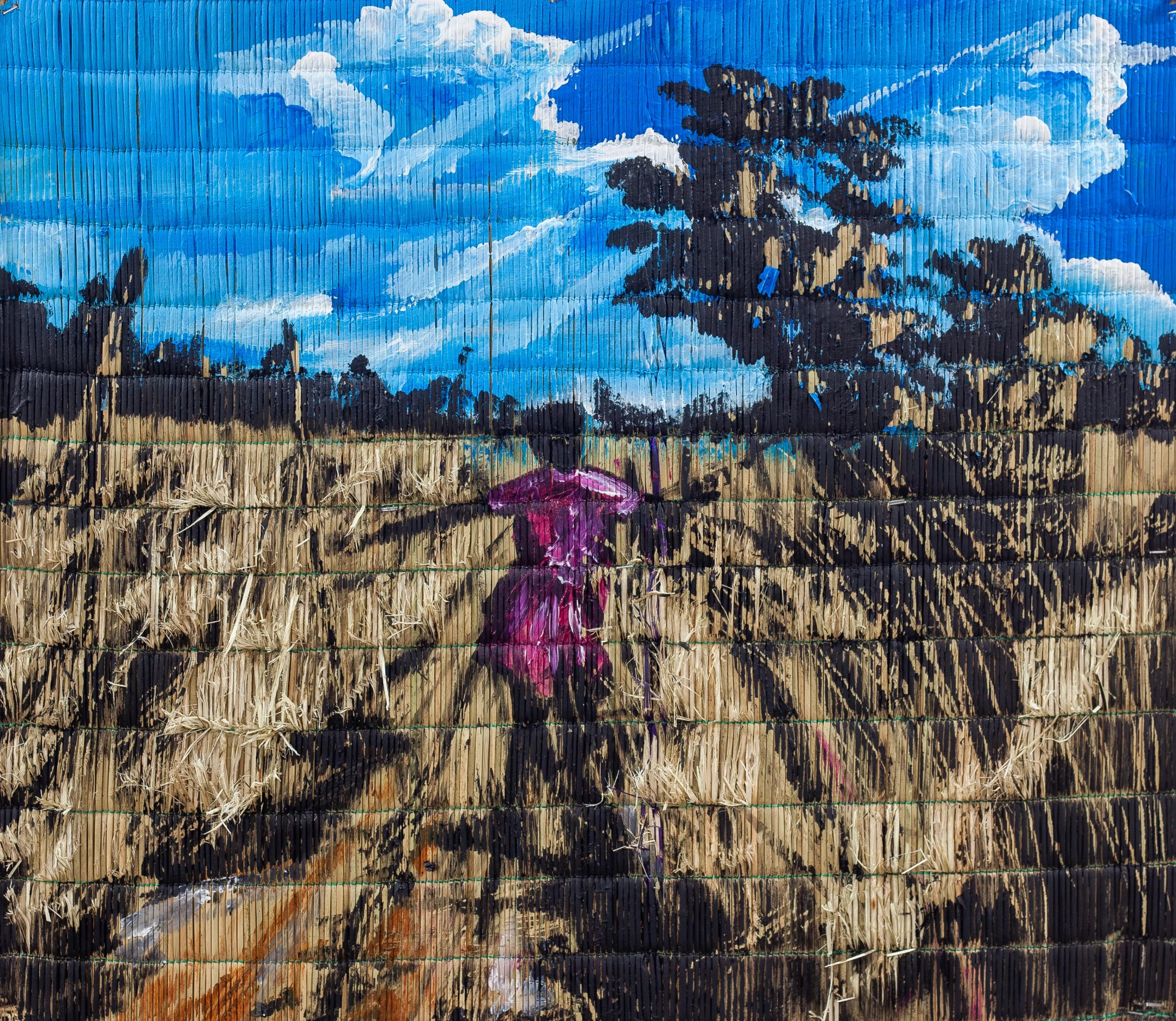
It is a spirit that informs the formal decision to work on grassmats, and the governing ruraltheme, that give the art its content. While the paintings are idyllic, at no pointdoes Maluleke ignore the ghost of colonialism, or the incursion ofindustrialization.
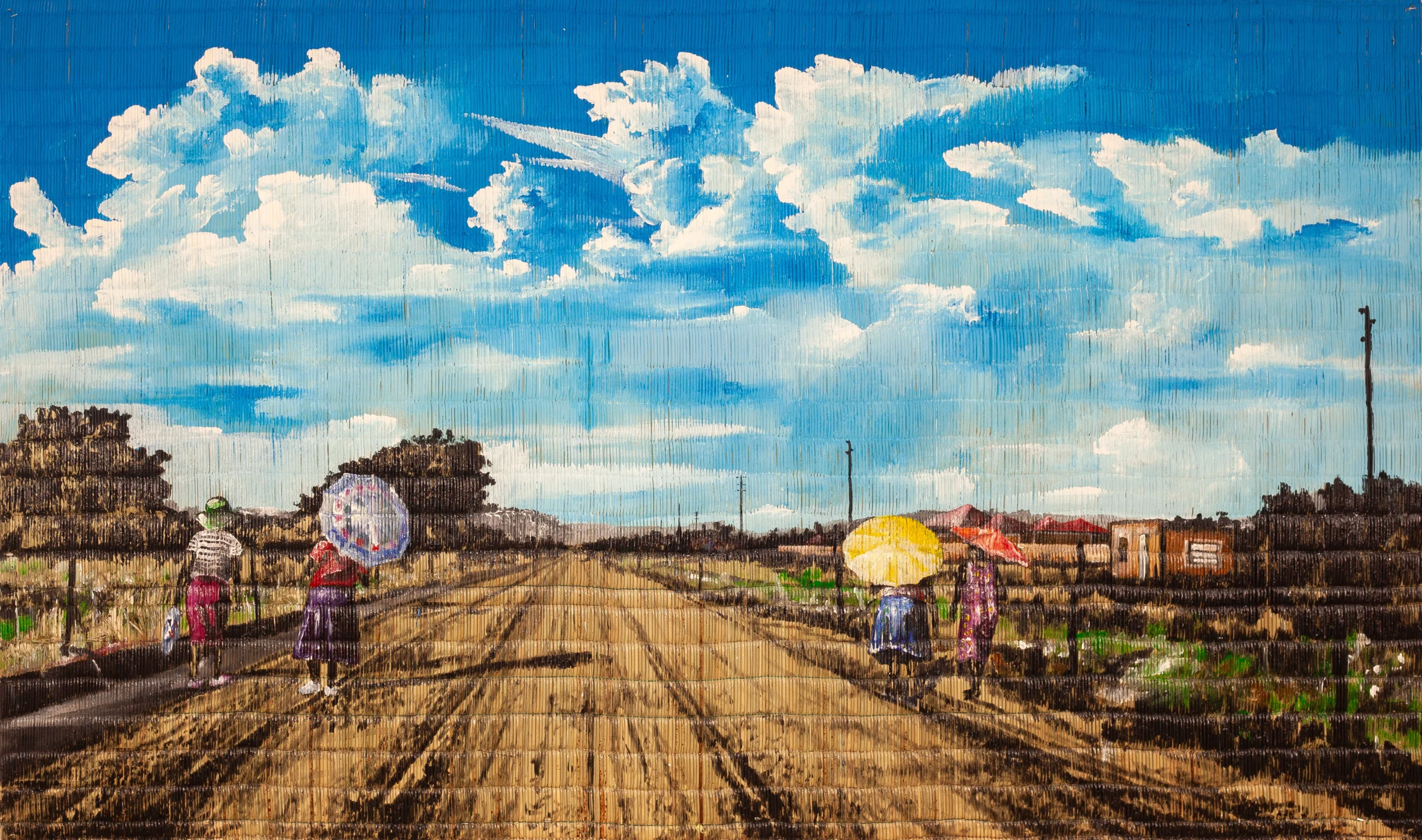
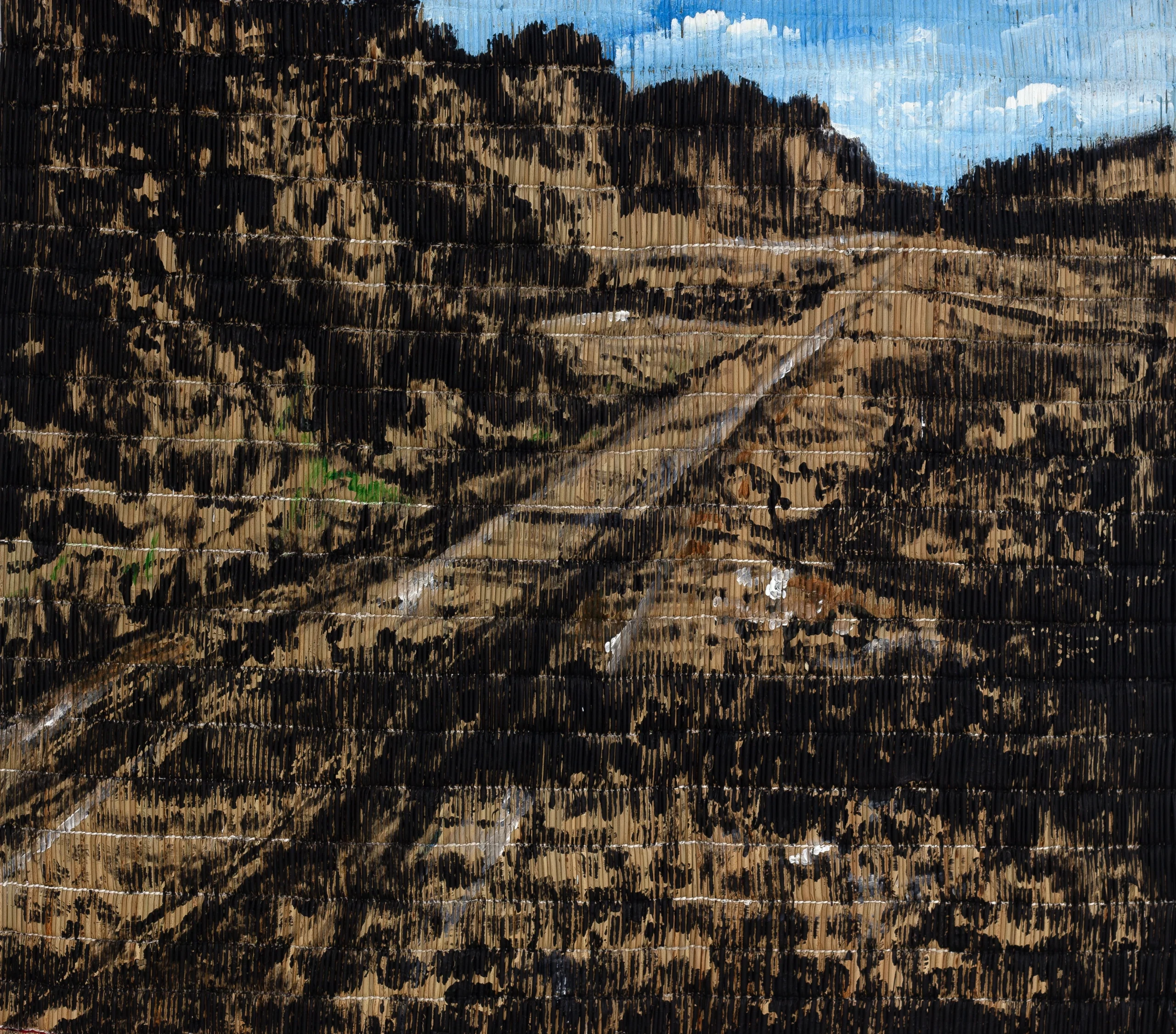
A railway track, consuming by nature, reminds us of humanprecarity, and nature’s sovereign hold. Maluleke’s pastoral idyll is never quiteinnocent. Still, it never loses its governing belief in ashared place, a shared belief in an African Pastoral.
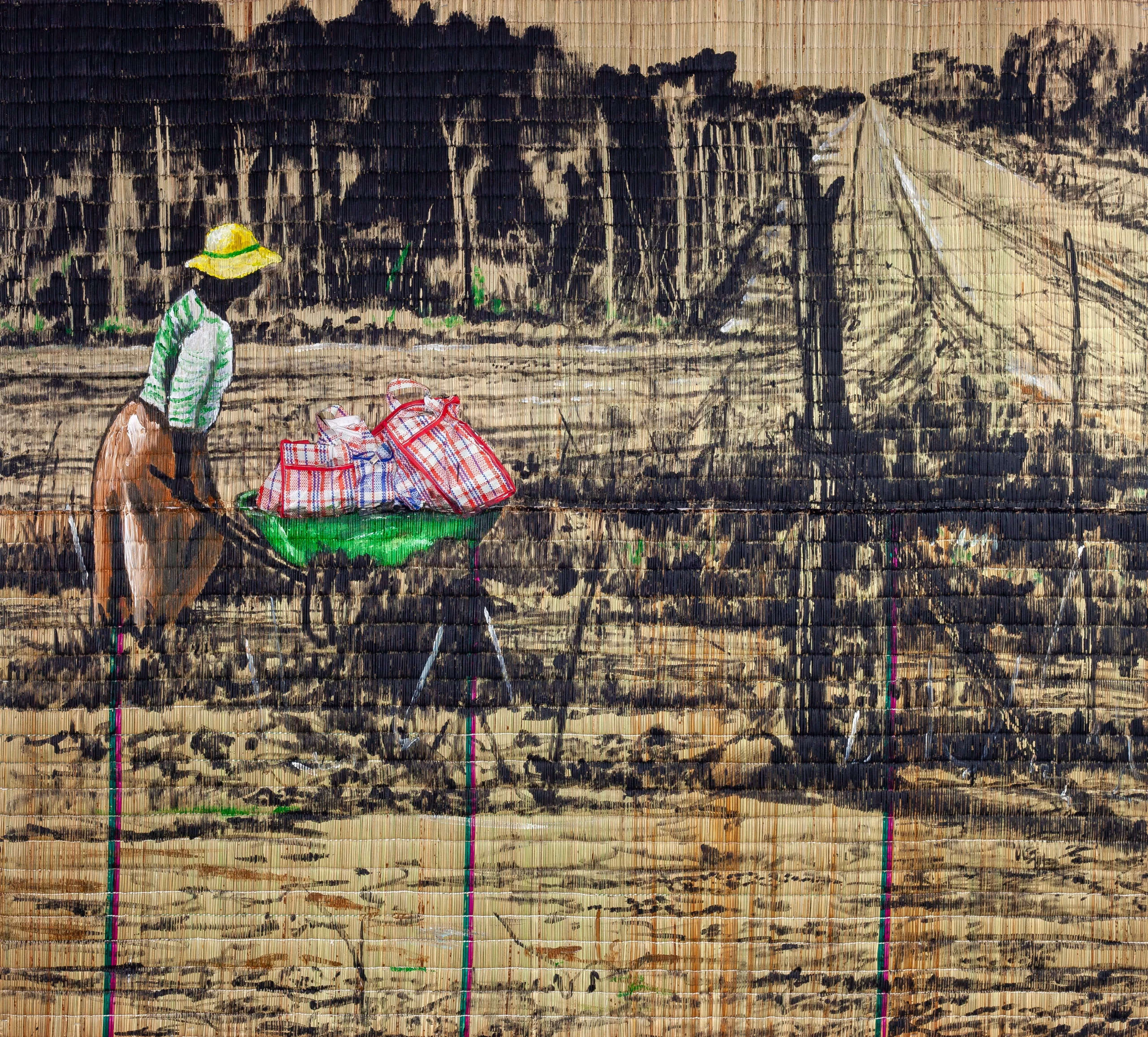
That his paintings have nowbecome sonic scrolls – songlines of rural African life – reveals a deepening ofFumani Maluleke’s uniquely authentic African vision.E V E Ashraf Jamal